In Thessaly, I met a man named Sigismund, whose life story deeply affected me. He had been a slave to several masters and had lived in many different countries. Sigismund was a Hungarian, born in the city of Gran. He was captured during the Battle of Barachan, while serving under Count Forchatz in the last wars.
After his capture, he was first forced to serve a Turkish master. Later, he was sold to a Jewish master, who treated him very harshly. After this difficult period, he was sold again, this time to an Armenian. Under this Armenian master, Sigismund behaved so well and worked so faithfully that his master eventually granted him his freedom.
With great effort and careful planning, Sigismund managed to travel to Larissa. There, the Emperor’s Resident took him into his service. This change in fortune gave Sigismund a measure of stability after many years of hardship and wandering Night Watch and the Use of Dogs.
A Man of Learning and Character
I was greatly pleased by Sigismund’s conversation and manner. He was an honest, worthy, and good-natured man, and despite all his suffering, he had remained firm in his Christian faith throughout his changing fortunes. His strength of character impressed me deeply.
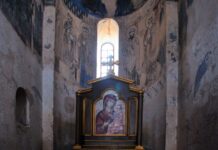
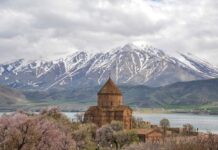
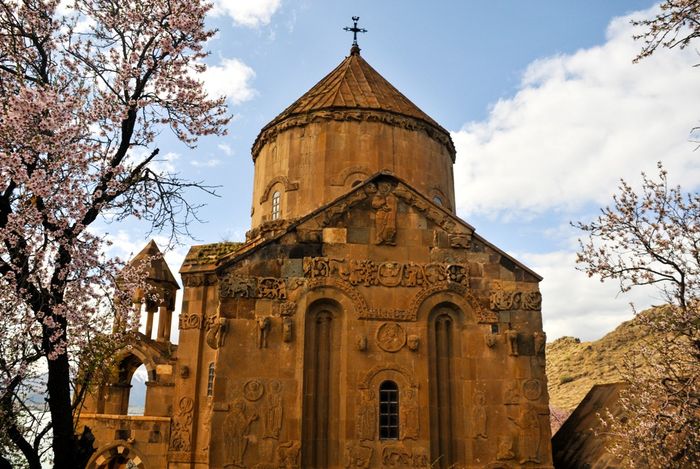
Sigismund spoke several languages fluently, including Hungarian, Slavonian, Turkish, Armenian, and Latin. This ability had helped him survive in foreign lands and among different peoples. He also showed me drawings he had made of many monasteries, abbeys, mosques, and other important buildings in Armenia, Persia, and Turkey. These drawings showed his sharp observation and careful hand.
I sincerely hope that by now he has returned safely to his own country, where he could finally live in peace.
How Captives Were Judged by Their Masters
The Turks, who are well acquainted with captives from many nations, often make observations about their abilities. They say that a Russian is best suited for work at the oar, a Georgian makes a good courtier, and an Albanian is a capable counselor. These judgments, though often unfair, reflect how captives were valued according to skill rather than humanity Walking Tour Ephesus.
On one occasion, a Turk in our company noticed a Georgian captive who appeared deeply discouraged by his condition. He tried to comfort him by saying that he should take heart, as he might one day rise to high rank and become a great man in Turkey.
Reflections on Power and Obedience
The first time I went to see the Grand Signior, Osman Chians did not hurry forward. When I asked him why, he replied that he took no great pleasure in being too close to the Sultan.
Later, while speaking about certain pashas who had been strangled, I remarked that in this respect he lived more safely than any pasha. He answered calmly that such matters must be patiently endured. He said that all their lives were in the Sultan’s hands.
In our smaller kingdoms, he explained, rulers and officials are tried and convicted before punishment. But in a vast empire like theirs, power could not be maintained in the same way. If the Sultan were to send for his head, he would have to accept it without question.
He ended by saying that in this country one must have patience even to the loss of life, and patience after that. These words remained strongly in my memory, as they showed the deep acceptance of absolute power and the quiet resignation that ruled many lives in that land.